 fr
 nl
 en


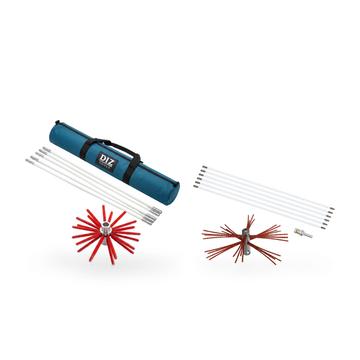
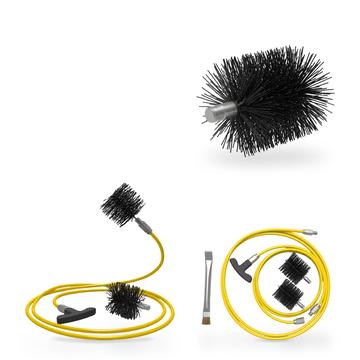
A rotary chimney sweeping kit runs on your drill: the rod turns and the head knocks soot and tar off the flue wall. You sweep from the bottom or from the top, also through 45° and 90° bends. Ventichim in Zandhoven, Belgium, supplies DIZ Tools kits with 12 mm or 17 mm rods, single 1 m chimney rods, flexible cables up to 15 m and 16 rotary heads and brushes.
Which kit do you need?
- 12 mm kit (DZ200): 6 flexible 1 m rods, 450 mm nylon whip head and drill adapter.
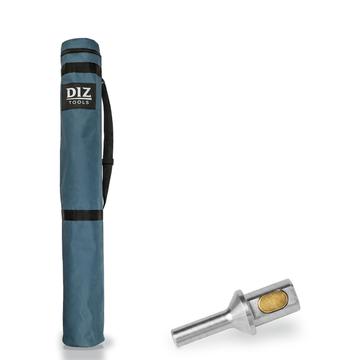
- 17 mm PRO kit (DZ100): 6 thicker 1 m rods, 450 mm nylon whip head, drill adapter and carrying bag.
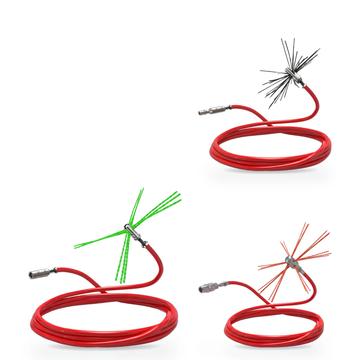
- Flexible cable (10 mm up to 15 m, 8 mm up to 5 m): one piece without joints, so nothing can come loose inside the flue.
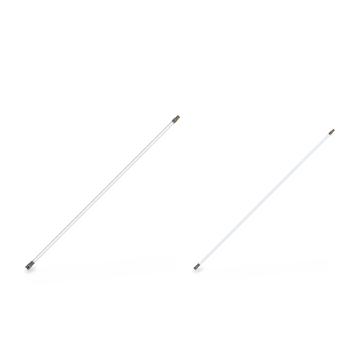
- Each extra metre is a single rod: DZ101 for 17 mm, DZ201 for 12 mm.
Which head for which flue?
- Stainless, flexible liner or enamelled flue: nylon whip or soft brush. No steel.
- Masonry flue with normal soot: nylon whip or steel cable head.
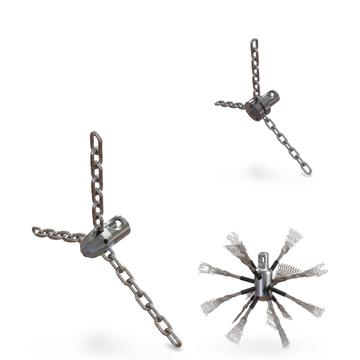
- Masonry flue with baked-on tar: chain flail. Not for stainless, flexible or rendered flues.
- Blocked masonry flue: chain head with breaker tip (DZ118 or DZ218).
- Ventilation duct: soft duct brush or 6 mm flexible cable.
- Pellet stove: 200 mm pellet brush or a pellet stove cleaning kit.
Frequently asked questions
Can I sweep a chimney with a drill?
Yes. The adapter goes on a drill or cordless drill, the rods click onto it and the head turns with them. Never use hammer mode.
What speed do I use?
12 and 17 mm rods: about 500 rpm with a nylon head, 800 to 1000 rpm with a chain head, in both directions. 6, 8 and 10 mm flexible cable: clockwise only, 500 rpm going in and up to 800 rpm when withdrawing. These speeds are recommended values and so not the mechanical maximum.
What should I watch with the drill?
Use a variable-speed drill with an adjustable torque limiter. Never use it on hammer setting. Start slowly and stop at once if the head gets stuck. Slow down in fragile or older chimneys. Both directions are allowed, but preferably clean in one chosen direction. Use the higher speed only when withdrawing, when you know the flue route and the access opening.
From the bottom or from the top?
Both. From the bottom you work through the stove or the soot door, and the protective tube (DZ193) keeps the rods off the edge. Cover the floor with the floor sheet (DZ194).
Does this replace the chimney sweep?
No. Sweeping yourself does not give you a sweep certificate. Check what your insurer asks for in your policy.